Choose a symbol already present in your story
The Moon may recall a walk, a familiar window or a way of feeling close across distance. Mars may connect with curiosity, a shared ambition or a willingness to go somewhere new. Choose the world that fits the relationship, rather than one you feel obliged to explain with borrowed language.
You can make an observing evening part of the gift, too. NASA’s lunar viewing guidance is a useful starting point for exploring light and shadow together. Keep the dedication’s meaning independent of whether a particular crater can be seen with the equipment or conditions available that night.
Write from a memory, not a slogan
Try three short parts: a detail you remember, what it means to you now, and something you hope to share next. The result might be two sentences. Read them aloud and remove any phrase you would never actually say to the recipient.
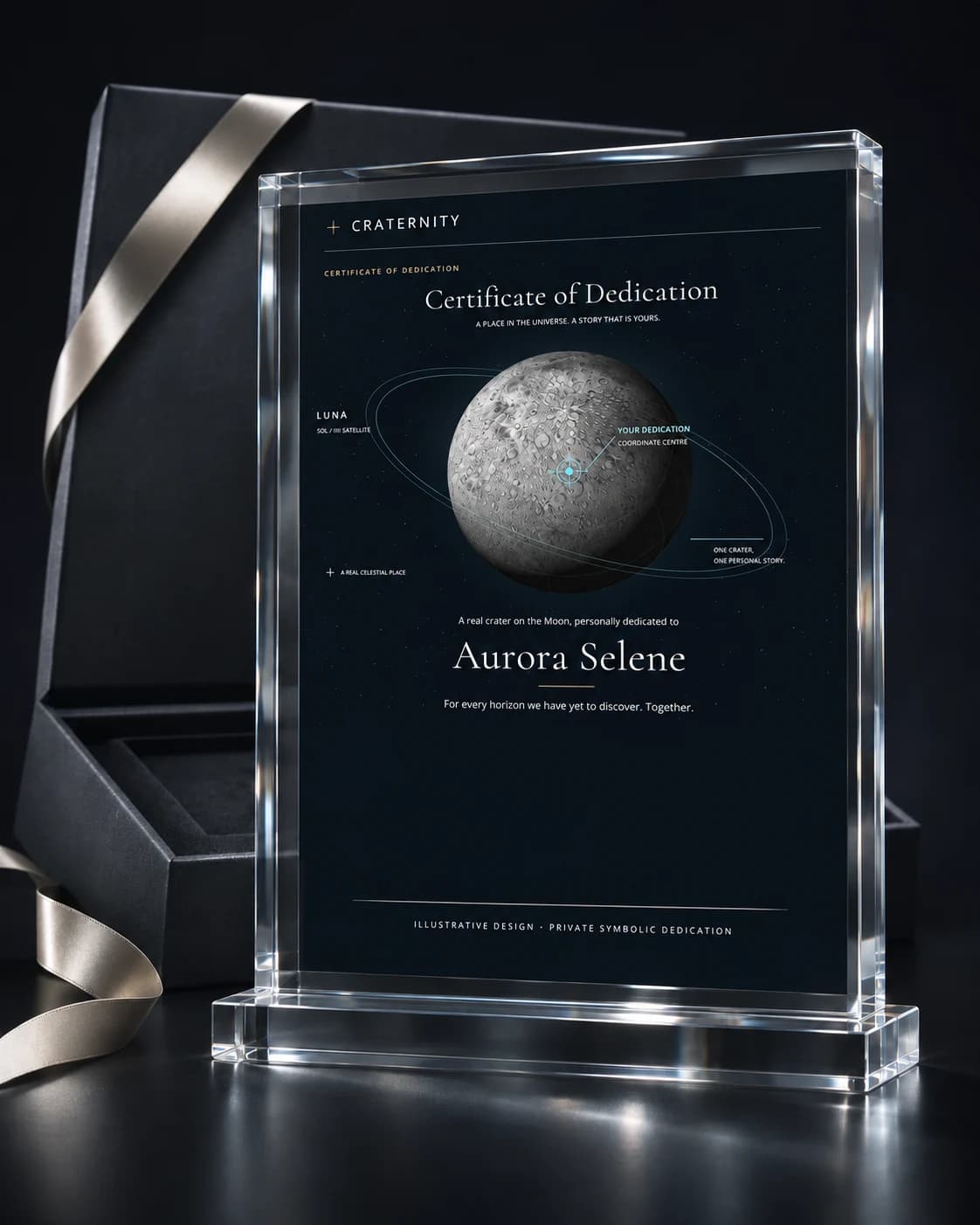
A private crater title can act as the heading for that message. Keep it short enough to recognise at a glance. The person’s name belongs in the recipient field, while the private title follows the service’s separate naming and uniqueness rules.
Make room for the opening
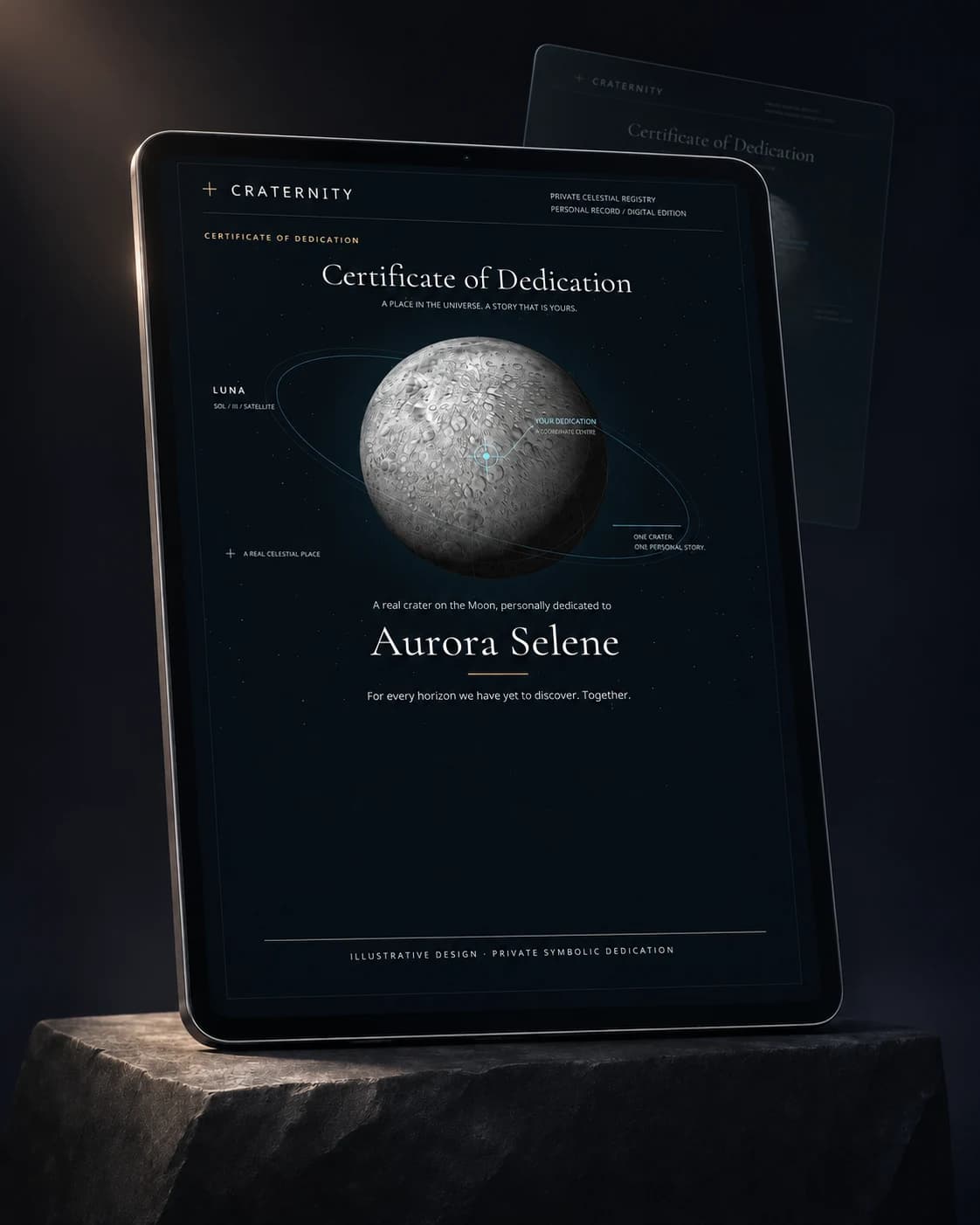
A personal link deserves a personal introduction. You could send it with a simple line inviting the recipient to open it when they have a quiet moment, or hand over a card and watch the Reveal together. Let the invitation create anticipation without explaining the whole gift in advance.
Let the promise stay honest
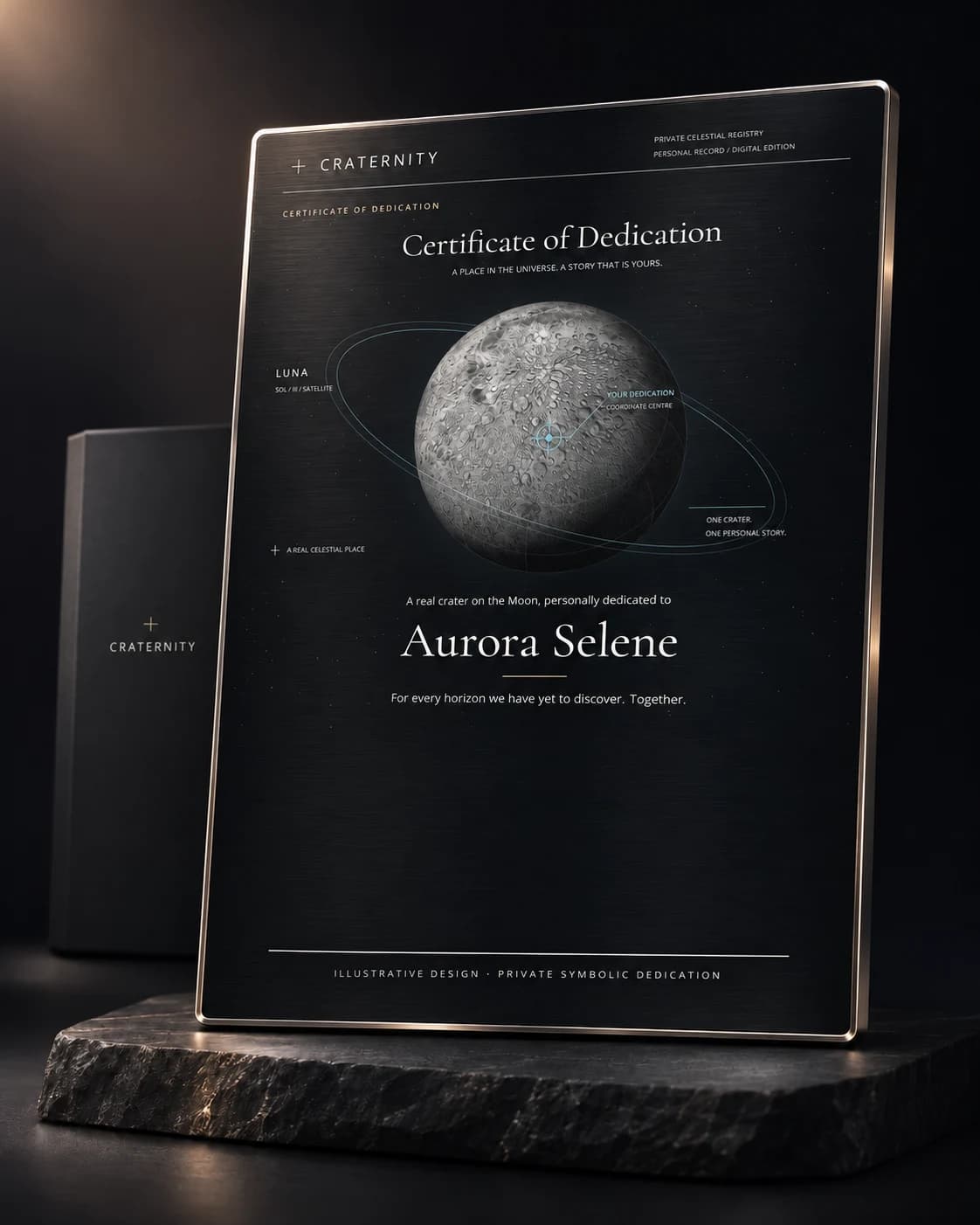
The gift is a symbolic dedication in a private register. It does not give official IAU recognition, land or control over a celestial place. Clear boundaries allow the personal meaning to stand on its own.
Sources and further reading
Primary scientific and naming guidance checked on 6 November 2026. Gift suggestions are CRATERNITY editorial recommendations; source organisations do not endorse this service.
CRATERNITY data provenance and image credits · Privacy and sharing