Gale: a landscape recorded in layers
Curiosity landed in Gale crater in 2012. NASA’s guide describes a layered central mountain and a history that includes sediment deposition, groundwater and an ancient lake environment. The mission turns the crater into a place where different rock layers can be investigated, rather than a single shape to be admired from above.
The useful question is how scientists connect an observation to an interpretation. A visible layer, a drilled sample and a chemical measurement provide different evidence. Ancient conditions that might have supported microbes are not proof that organisms lived there; the uncertainty is part of the interest.
Jezero: a river’s record in a crater
NASA’s Perseverance mission documentation describes Jezero’s delta as material deposited where an ancient river entered a lake. Orbital maps provide the wider setting, while rover images and measurements let the team examine particular rocks and sediments.
A mission map can also contain temporary route markers, informal working labels and annotations. Read its date and legend. A coloured line showing a rover’s route is not the crater boundary, and a landing marker is not an image of an entire crater.
Why the viewpoint matters
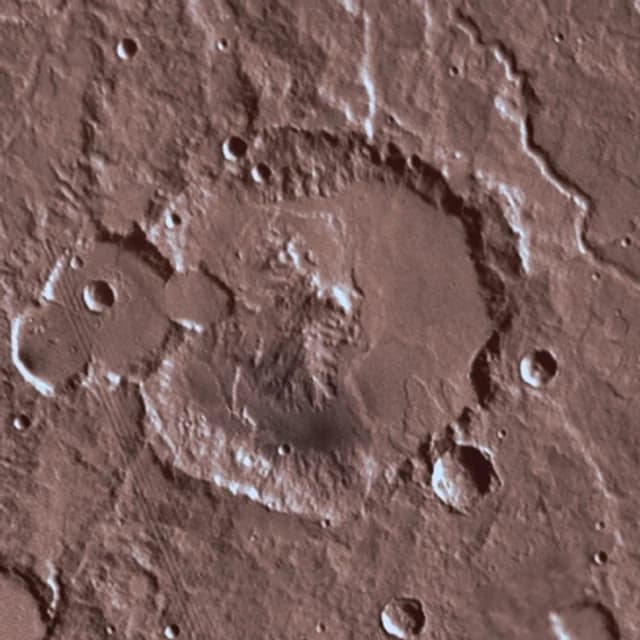
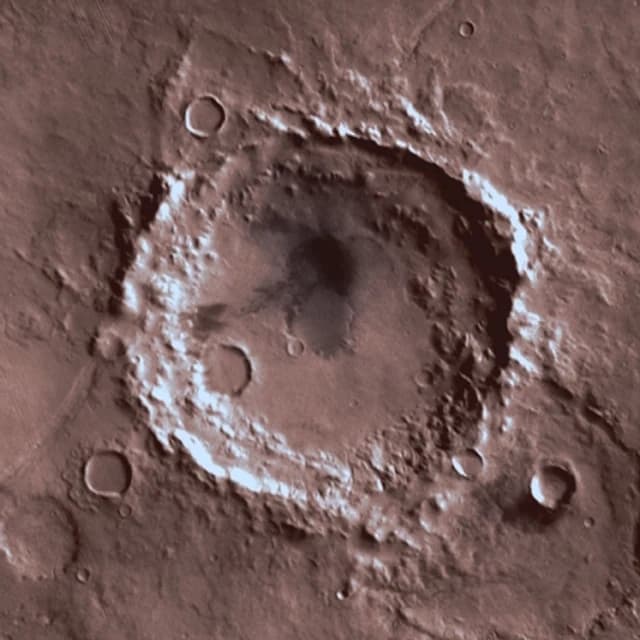
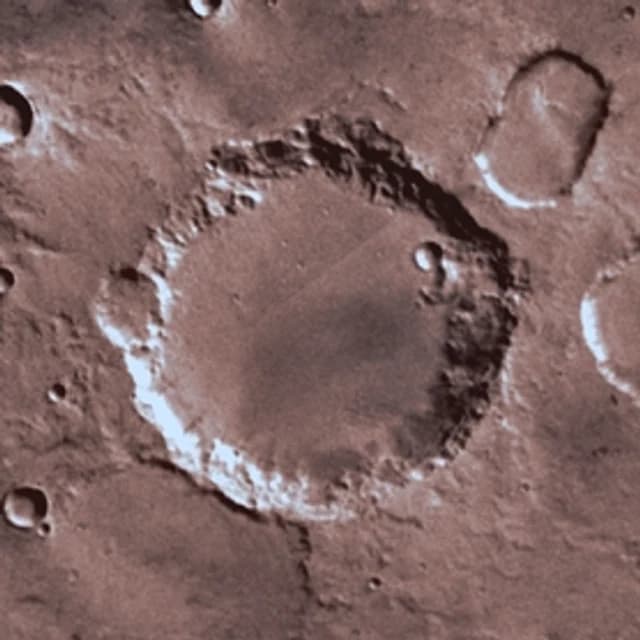
A rover photograph shows the landscape from the surface; an orbital image helps locate that view within a broader area. A global colour texture provides another scale again. Moving between those views is rewarding, but they should not be substituted for one another without explanation.
For a less-studied catalogue crater, coordinates and diameter may be available without a detailed individual geological history. Resist filling that gap with a story borrowed from Gale or Jezero. A real identifier and an honest description of what is known are stronger foundations than an invented age, lake or mission connection.
A personal story, grounded in an actual place
A Mars dedication can draw on the idea of exploration without claiming a rover visited the selected object. Choose a documented location, keep its scientific reference intact and use your personal message to explain why the broader theme matters to the recipient.
Sources and further reading
Primary scientific and naming guidance checked on 6 November 2026. Gift suggestions are CRATERNITY editorial recommendations; source organisations do not endorse this service.
- NASA Science: a guide to Gale crater ↗
- NASA Science: Perseverance at Jezero’s delta ↗
- NASA Science: Mars facts ↗
CRATERNITY data provenance and image credits · Privacy and sharing